About Me
Introduction
Long before I had a job title, I was already curious about how things worked - and whether there might be a better way to make them work.
As a child, I often heard my father say:
“Think unconventionally.
Think outside the box.
Look several moves ahead.”
At the time, I didn't fully understand what he meant. The meaning of those words became clearer over the years, through experiments, mistakes, challenges, and practical experience.
My interest in technology began early. I joined an electronics club while still in primary school and later became involved in university research laboratories working on electronic control and diagnostic systems. I also spent countless hours experimenting with computers, including a Pravets 8 that I used at home.
My professional journey eventually took me through industrial control systems, ship electrical design, engineering software development, enterprise IT infrastructure, and IT management. Later, my focus shifted towards Azure cloud platforms and DevOps engineering.
Looking back, the technologies and responsibilities changed considerably, but the questions guiding me remained remarkably consistent:
What is the real problem? What would a better outcome look like? And what needs to happen today to make it possible tomorrow?
Those questions, together with the lessons I learned from the people I worked with, gradually shaped my engineering approach.
Engineering Approach

Technology should serve people
During my years as IT Manager at Keppel FELS Baltech, I developed an approach built around a simple principle: IT exists to support the people doing the actual work, not the other way around.
Long before DevOps became widely recognized, collaboration, automation, continuous improvement, and direct user feedback were already central to how I organized our IT activities.
Rather than waiting for formal requests, I observed engineering workflows and discussed everyday challenges with ship designers. This often revealed opportunities to simplify or automate time-consuming tasks, sometimes without the engineers themselves realizing that improvement was possible.
Other ideas came directly from colleagues. In every case, the starting point was the same: understanding the actual problem and defining a meaningful outcome.

Prove the value before scaling
Before implementing a change, we evaluated its expected benefits, technical risks, required resources, and impact on existing workflows, including people's natural resistance to change.
Instead of introducing changes everywhere, we typically started with one or two workstations. We observed the results, worked directly with the engineers, listened to their feedback, and refined the solution.
Only when an improvement demonstrated its practical value did we extend it to the broader engineering environment.
Working with consistently limited budgets reinforced another principle that became part of our departmental philosophy:
"We do more with less."
For us, this was not about compromising quality. It meant making better use of available resources, eliminating unnecessary work, and finding effective solutions without assuming that every problem required additional spending.

I start from the future
When approaching a new project, I usually begin by imagining its completed state.
What should the final solution look like? What should it accomplish? How will people interact with it? What would make it intuitive, reliable, safe, and efficient?
Once that future state becomes clear, I start working backwards.
I identify the capabilities required to achieve it, the critical milestones, the dependencies between them, and the obstacles that can already be anticipated.
Moving backwards from the intended result towards the present helps me establish the essential architecture, functionality, and key decisions before committing to implementation.
Only then comes a deeper critical analysis.

Research, challenge, create
I research existing solutions, examine established industry practices, study how large organizations approach similar challenges, and evaluate relevant technologies and architectural alternatives. Today, discussions with AI have also become part of this process.
But researching existing solutions does not mean copying them.
I use that knowledge to challenge my assumptions, reconsider the design, and develop an approach suited to the actual requirements, with the ambition to improve upon existing solutions whenever there is a meaningful opportunity.
The result is a conceptual implementation plan based not only on established practices, but also on independent reasoning and practical experience.
For me, engineering is not simply about implementing technology correctly.
It is about understanding what is worth developing,
why it matters,
and finding the most effective way to make it happen.
Professional Background

Engineering Software & International Implementations
My professional background has its roots in electronics and engineering rather than traditional IT.
My early work with industrial control systems and ship electrical design gradually led me into specialized engineering software, where technology, automation, and practical engineering requirements came together.
At Keppel FELS Baltech, I started as an electrical designer before moving into system administration and later IT management.
Over more than two decades, my work combined enterprise IT operations with engineering software development, automation, and the integration of specialized systems.
A significant part of this experience involved Tribon, a comprehensive shipbuilding design system used to create detailed 3D models of ships and offshore structures.
My work covered several Tribon modules, including General Design, Cable Modelling, Accommodation, System Administration, and later data extraction.
I implemented Tribon systems and delivered technical demonstrations and training to shipyards and ship design offices in Russia, Ukraine, England, Singapore, China, India, Indonesia, Malaysia, Greece, and Bulgaria.
Working directly with engineering professionals from different countries and organizations gave me valuable insight into diverse engineering practices, operational requirements, and approaches to solving technical problems.
Enterprise Infrastructure & Cloud Engineering
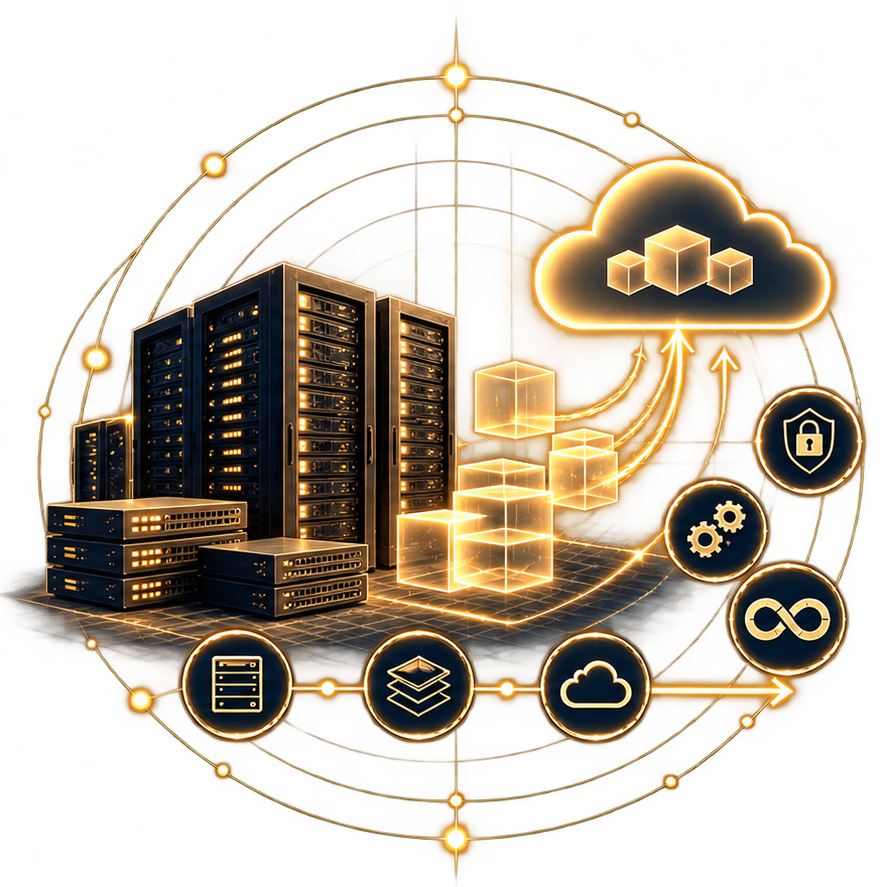
An important part of my work involved planning the long-term development of our IT infrastructure.
Server upgrades and replacements were typically planned over five-to-seven-year cycles, depending on operational requirements and circumstances.
My responsibilities covered the entire process: identifying future needs, researching suitable equipment and technical specifications, obtaining and evaluating supplier quotations, purchasing equipment, and overseeing its delivery.
The work continued through software deployment, system configuration, integration, and commissioning. I remained directly involved in the technical activities rather than limiting my role to management and coordination.
Working within consistently limited budgets meant that every investment required careful consideration. Technical suitability, operational reliability, cost, and long-term usefulness all had to be balanced against the actual needs of the organization.
This combination of engineering knowledge, hands-on technical work, infrastructure planning, and management gave me a broad perspective on the entire lifecycle of complex IT systems.
My later professional experience expanded into enterprise virtualization and subsequently cloud platforms and DevOps engineering, with a focus on Microsoft Azure, Infrastructure as Code, CI/CD automation, governance, and security.
Although the technologies have changed considerably throughout my career, the experience gained across these different disciplines continues to influence how I approach modern cloud infrastructure and platform engineering.
Education & Certifications
Education
I hold a Master's degree in Production Automation from a Technical University of Ruse, Bulgaria.
My academic studies covered electronics, automatic control systems, pneumatics, computer technology, and programming. During my final year, I specialized in Nuclear Power Engineering.
This multidisciplinary technical education provided the foundation for my subsequent work in industrial automation, engineering software, IT infrastructure, and cloud technologies.
Professional Certifications
My Microsoft professional certifications include:
- Microsoft Certified: DevOps Engineer Expert
- Microsoft Certified: Azure Security Engineer Associate
- Microsoft Certified: Azure Administrator Associate
These certifications complement my practical experience in cloud infrastructure, DevOps engineering, automation, and security.
Beyond the CV
A lifelong curiosity about technology
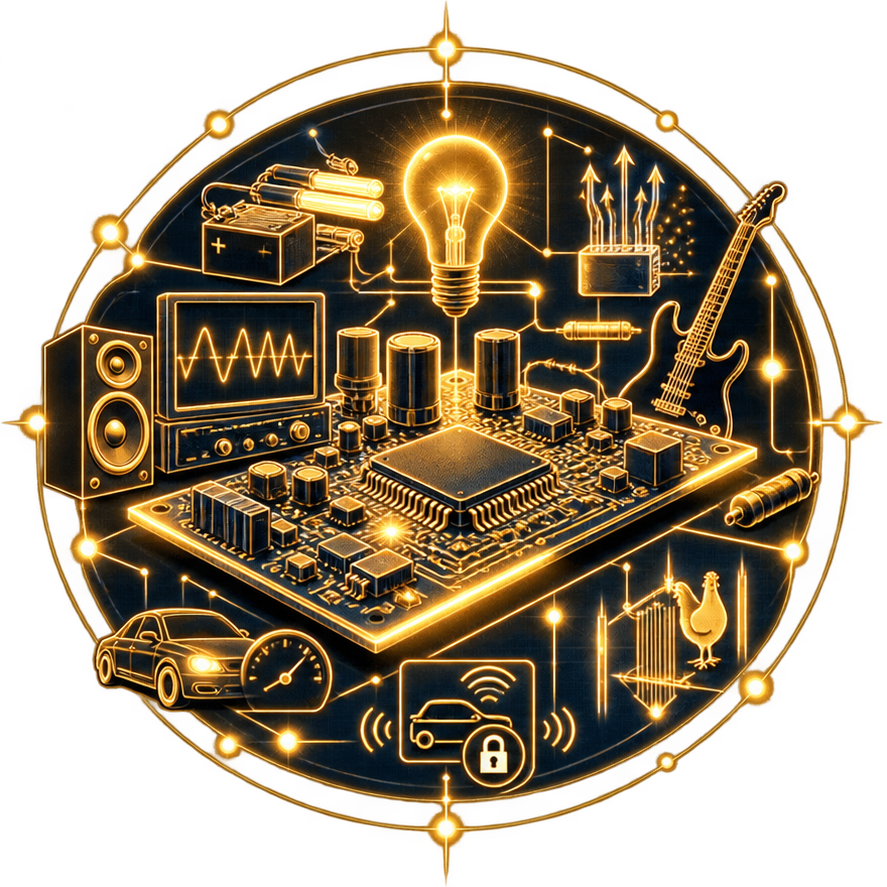
As a schoolboy and later as a university student, I had an almost irresistible habit of taking electronic devices apart to understand how they worked and whether a small modification could make them work better.
Over the years, this curiosity led me to build and experiment with all kinds of electronic devices: stereo amplifiers, audio equalizers, guitar distortion effects, music-controlled lighting systems, air ionizers, and battery-powered fluorescent lighting inverters during periods of electricity shortages.
Some projects were purely experimental. Others addressed practical needs.
I developed electronic indicators for real-time vehicle fuel consumption long before such features became common in production cars. My university graduation project was an infrared poultry-counting system designed to operate reliably in a hot, humid industrial environment.
Later, I designed and built my own automotive alarm systems, using sensors capable of detecting slight vehicle movement or changes in inclination. At a time when sophisticated factory-installed security systems were uncommon, these became practical products that I installed for numerous customers.
What fascinated me was never just the electronic circuit itself. It was the entire process - understanding a problem, imagining a solution, building it, testing it, and seeing it work in the real world.
From electronic circuits to software
When I moved to Varna, circumstances changed. Frequent moves between rented homes made it difficult to maintain an electronics workshop.
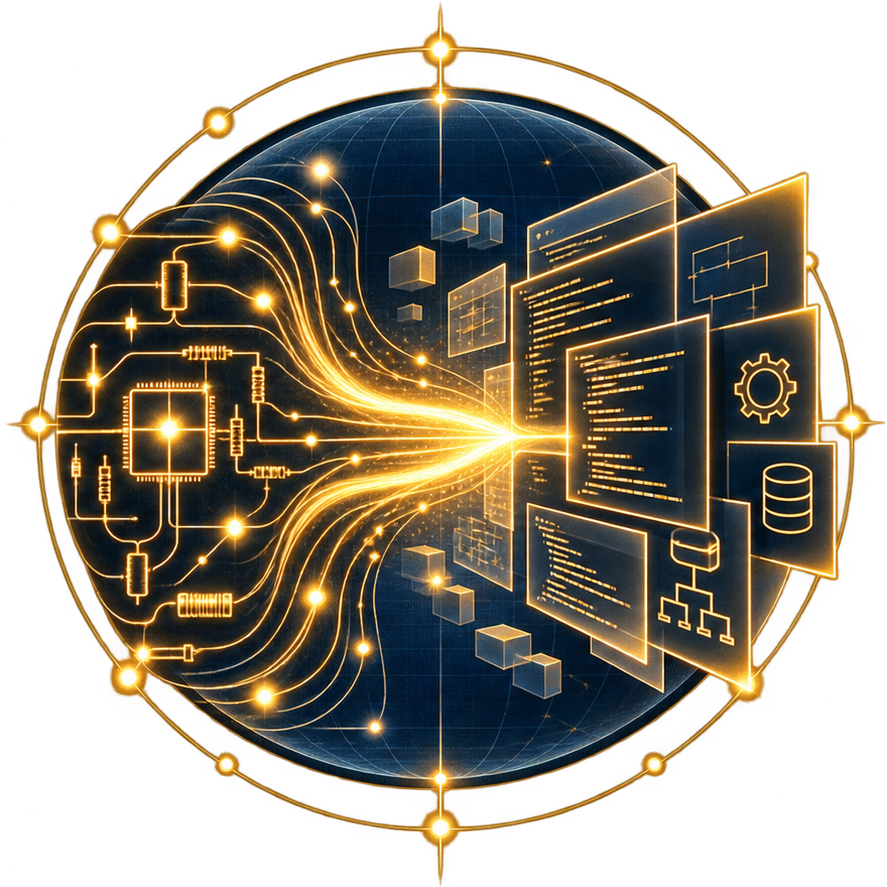
So I gradually redirected that same curiosity towards software development, initially as an activity alongside my regular professional responsibilities.
While still learning C++ and MFC, I developed and sold my first commercial software application to Tribon Solutions in Sweden - a graphical tool for Tribon database administration. I later delivered an improved version, DBTools Pro, which became part of the company's software distribution package.
I also authored the Tribon System Administration manual.
Over the following years, I developed numerous applications for engineering automation, specialized system integration, data exchange, and internal IT operations.
Some were created for international engineering organizations, including Chantiers de l'Atlantique in France. Others supported everyday engineering and administrative work, eliminating repetitive tasks and giving users capabilities that had previously required specialized assistance.
My programming work evolved through C++, C#, Python, PHP, and .NET, depending on the requirements and the technologies available at the time.
Alongside these professional developments, I continued experimenting with personal software projects, including several generations of my own web content management systems - from the early PHP-based MBM Project to WebPresent and, more recently, DEVISIMO.
Some of these projects became commercial products. Others were developed for internal use or simply to explore new ideas.
What they all share is something that has stayed with me since childhood.
Тhe pleasure of understanding how something works, discovering how it could work better, and turning that possibility into reality.
About MBM Project
MBM Project has been part of my personal journey for more than two decades.
Its origins go back to the Tribon Discussion Board, an online community I created to bring together shipbuilding professionals working with Tribon engineering software.
What started as a PHP-based discussion platform gradually evolved into several generations of custom-developed web applications.
One of them was WebPresent, an ASP.NET MVC content management system that I developed together with my son.
Today, mbmproject.com runs on DEVISIMO, my own Blazor-based content management platform, which continues to evolve alongside the ideas I explore.
Over the years, the technology behind the website has changed considerably. Its purpose has evolved as well.
Today, MBM Project is a place where I bring together my professional experience, engineering projects, technical knowledge, and personal perspectives.